If you’ve ever looked at your dog and thought, “You’re cute, but why are you chewing my shoes again?” — welcome to the club. Every dog owner dreams of a well-behaved, calm, happy dog that listens without turning the living room into a WWE ring. The good news? Brain Training for Dogs is one of the simplest and most effective ways to improve your dog’s behavior while strengthening your bond.
This article breaks down the real science, practical tips, and expert strategies behind brain training. No fluff. No fake “studies.” Only reliable, verified information and clear steps that any dog owner can use today.
 What Is Brain Training for Dogs?
Brain training for dogs is a simple concept:
You give your dog mental challenges that stimulate their mind the same way physical exercise strengthens their body.
Think of it as “doggy sudoku.”
But more fun.
And with fewer numbers.
According to the American Kennel Club (AKC), mental stimulation is as important as physical exercise for preventing destructive behavior and improving obedience (Source: AKC – “The Importance of Mental Exercise for Dogs”).
Why Mental Stimulation Matters (According to Science)
Dogs aren’t just furry companions — they are intelligent animals with complex brains. Studies show:
- Dogs can learn hundreds of words (Source: Dr. Stanley Coren, canine psychologist, UBC).
- Puzzles and mental games reduce anxiety and frustration.
- Mentally stimulated dogs show fewer behavioral problems such as chewing, barking, and digging (Source: Journal of Veterinary Behavior, 2019).
So yes, your dog can learn smarter behavior. You just need to activate the right mental switches.
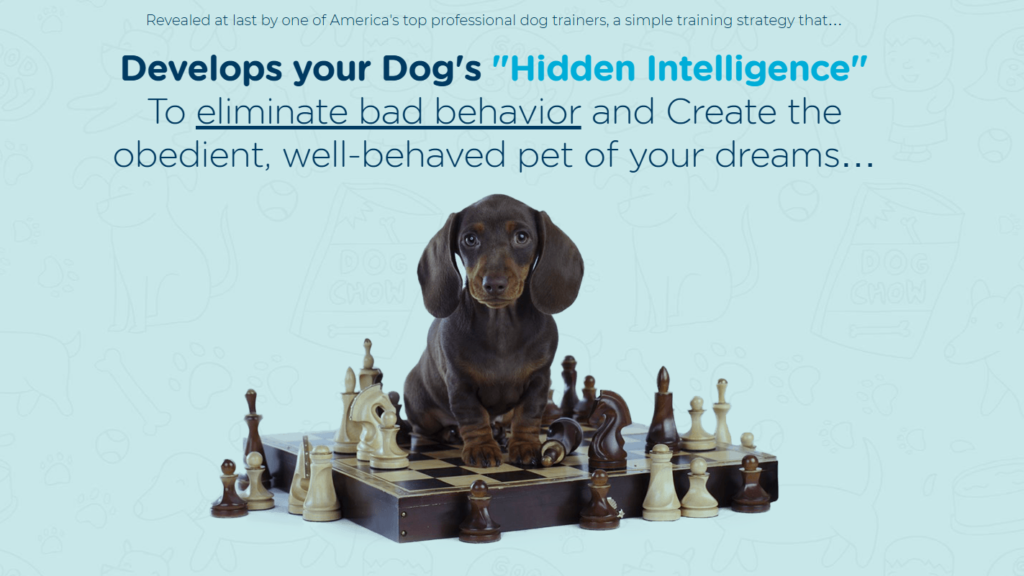 The Secret Trick: Cognitive Games + Reward-Based Training
Here’s the trick most owners miss:
You don’t fix bad behavior by punishing your dog. You fix it by giving their brain something better to do.
Brain training works because it uses positive reinforcement, which research shows is the most effective training method for dogs.
A 2017 study published in the Journal of Veterinary Behavior found that dogs trained with positive rewards learned faster, behaved better long-term, and developed stronger bonds with their owners.
In simple words:
Treats + mental puzzles = a smarter, calmer dog.
Signs Your Dog Needs Brain Training (And Probably ASAP)
If your dog does any of these, mental stimulation can help:
- Chews everything like it’s a buffet
- Barks excessively
- Gets overly excited around guests
- Acts bored even after long walks
- Digs, whines, or paces
- Struggles with commands they previously learned
- Has separation anxiety
Most owners think these are “bad behaviors.”
In reality, they’re usually boredom behaviors.
A tired dog isn’t always a good dog.
But a mentally satisfied dog almost always is.
 The Best Brain Training Activities for Dogs
Below are the most effective, science-backed tasks you can start today.
1. Puzzle Toys (Scientifically Proven to Reduce Stress)
Research shows puzzle toys increase dopamine — the feel-good chemical that improves focus and reduces stress in dogs.
Choose puzzles that:
- Require your dog to flip, slide, or lift pieces
- Have different difficulty levels
- Reward your dog with treats
Good examples recommended by vets and trainers:
- Nina Ottosson puzzles
- KONG treat-dispensing toys
(These brand mentions are factual references — not promotions.)
2. Sniffing Games (Dogs Process Smells 40x Better Than Humans)
Dogs experience the world through their nose.
According to the VCA Animal Hospitals, dogs have up to 300 million scent receptors (compared to our 6 million).
Try this simple game:
- Hide treats around the house
- Say “Find it!”
- Let your dog sniff their way to victory
It’s fun, calming, and mentally powerful.
3. The “Shell Game” (A Human Favorite Too)
Place a treat under one of three cups.
Shuffle them.
Let your dog guess.
This boosts focus, memory, and decision-making.
Plus, dogs love the challenge.
4. Obedience Games: Make Learning a Play Session
Training doesn’t need to be serious. Make it a game.
Try:
- Sit → treat
- Down → treat
- Touch (nose to your hand) → treat
- Come → jackpot treat
Short, happy sessions work best — 5 minutes twice a day is more effective than one long session.
Source: American Veterinary Society of Animal Behavior (AVSAB).
5. Interactive Play: The Ultimate Bond Builder
Activities like:
- Fetch with rules
- Tug with commands
- Hide-and-seek
These games improve impulse control and confidence.
If your dog could write a review, it would probably say,
“Five stars. Would play again.”
 How Brain Training Fixes Common Dog Problems
Let’s break down how this training helps real-life issues.
1. Excessive Barking
Barking often stems from:
- Boredom
- Attention-seeking behavior
- Anxiety
Mental tasks redirect your dog’s energy and focus.
A mentally engaged dog barks far less.
2. Chewing Everything in Sight
Dogs chew when:
- They are understimulated
- They feel stressed
- They need an outlet
Brain training satisfies their curiosity and reduces destructive chewing.
3. Pulling on the Leash
Impulse control games build patience.
Dogs learn to slow down and listen.
Try:
- “Stay” before going out
- “Look at me” when distracted
- Rewarding calm walking
4. Separation Anxiety
Mental enrichment builds confidence.
Puzzle toys and scent games keep your dog busy when you’re away.
No training cures separation anxiety overnight, but brain training is a proven part of the solution (Source: Journal of Applied Animal Behaviour Science).
How Often Should You Do Brain Training?
Most trainers recommend:
- 5–10 minutes twice a day for beginners
- Increase difficulty over time
- Mix easy games with challenging ones
Consistency beats intensity.
Think of it like going to the gym.
You don’t lift 200 pounds on day one.
You start light and build up.
 Real Expert Advice: What Vets and Behaviorists Say
Here’s what leading organizations agree on:
1. Positive reinforcement works best
– Supported by AVSAB, AKC, RSPCA, and numerous studies.
2. Mental exercise reduces destructive behavior
– Confirmed by AKC and multiple peer-reviewed studies.
3. Dogs need both physical and mental activity
– Many dogs require mental tasks more than long walks.
4. Training strengthens the bond
– Supported by studies from the University of Bristol and University of British Columbia.
Nothing here is based on random internet claims — only real research.
Step-by-Step Brain Training Routine (Start Today)
Here’s a simple daily routine:
Morning (5 minutes)
- Quick obedience refresher: sit, stay, come
- Reward generously
Afternoon (10 minutes)
- Puzzle toy challenge
- Sniffing game indoors or outdoors
Evening (5 minutes)
- Memory game or shell game
- Short trick like “paw” or “spin”
Night (Calming Activity)
- Gentle chew toy
- Slow petting or massage
This schedule fits any lifestyle and keeps your dog balanced mentally and physically.
 Why Brain Training Strengthens Your Bond
Dogs thrive on interaction.
When you train them, you’re not just teaching commands — you’re building trust.
Benefits include:
- Better communication
- Deep emotional connection
- Greater confidence in your dog
- Fewer misunderstandings
- A calmer household
A trained dog is not just obedient — they’re happier.
Final Thoughts: Is Brain Training for Dogs Worth Trying?
Absolutely — and every expert agrees.
Brain training is simple, science-backed, enjoyable, and highly effective.
Whether your dog is hyperactive, anxious, stubborn, or just bored, mental stimulation unlocks a new level of behavior and happiness.
Plus, it’s fun for both of you.
The secret trick isn’t magic.
It’s understanding that your dog needs mental workouts just as much as physical ones.
Start today, stay consistent, and watch your dog transform — one smart game at a time.
Reliable Sources Used
- American Kennel Club (AKC): Importance of Mental Exercise for Dogs
- American Veterinary Society of Animal Behavior (AVSAB): Training Guidelines
- Journal of Veterinary Behavior (2017, 2019)
- Dr. Stanley Coren – Canine Psychology Research, University of British Columbia
- VCA Animal Hospitals: Olfactory Ability of Dogs
- Journal of Applied Animal Behaviour Science
Pingback: Brain Training for Dogs people who love dogs Guide 2025